
What Documents Need to Be Notarized? A Complete Guide (2026)
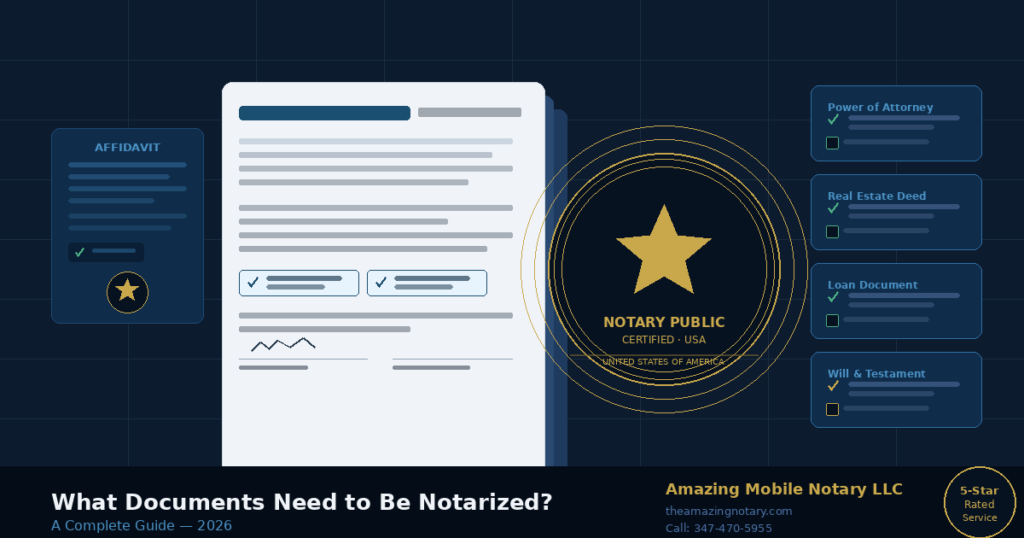
If you have ever wondered what documents need to be notarized, you are not alone. Many people are unsure about which paperwork requires official notarization and which does not. The good news is that once you understand the basics, the process becomes very straightforward.
In this guide, we cover the most common types of documents that need to be notarized, why notarization matters, and how you can get your documents certified quickly — from the comfort of your home or office.
What Is Notarization and Why Does It Matter?
Notarization is the process by which a certified notary public verifies the identity of the person signing a document, witnesses the signature, and applies an official seal or stamp. This process confirms that the signing was voluntary and that the signer is who they claim to be.
Courts, government agencies, financial institutions, and real estate companies rely on notarized documents to prevent fraud and ensure legal validity. Without notarization, many documents simply cannot be accepted.
The Most Common Documents That Need to Be Notarized
Below is a practical notarized documents list that covers the most frequently requested document types across the United States.
1. Power of Attorney (POA)
A power of attorney is one of the most important documents that requires notarization. It grants another person the legal authority to act on your behalf in financial, medical, or legal matters. Because this document carries significant legal weight, nearly every state in the US requires it to be signed in front of a notary public to be valid.
2. Real Estate Documents
Real estate notary services transactions involve a large volume of paperwork that must be notarized. This includes deeds, mortgage agreements, refinancing documents, title transfers, and lease agreements. If you are buying or selling a home, closing documents almost always require the presence of a mobile notary or a loan signing agent to complete the process correctly.
3. Affidavits and Sworn Statements
An affidavit is a written statement made under oath. Courts, immigration authorities, and government agencies commonly require affidavits to be notarized before they are accepted. Whether it is an affidavit of residency, an affidavit of identity, or a general sworn statement, a notary public must witness the signature and administer the oath.
4. Wills and Estate Planning Documents
Wills, trusts, and living wills often require notarization depending on the state. Even in states where notarization is optional, having your will notarized makes it “self-proving,” which means probate courts can accept it without additional witness testimony. This saves your family significant time and legal costs after your passing.
5. Loan and Financial Documents
When you take out a mortgage, refinance your home, or sign a business loan agreement, lenders typically require notarized signatures. A loan signing agent — a specially trained notary — handles the signing appointment, ensures every page is signed correctly, and returns the package to the lender on time. Errors in loan documents can cause significant delays, which is why working with a professional signing agent matters.
6. Medical and Healthcare Documents
Advance healthcare directives, living wills, HIPAA authorization forms, and medical power of attorney documents frequently require notarization. These documents outline your healthcare wishes and designate a trusted person to make medical decisions on your behalf if you become incapacitated. Getting them notarized ensures they will be honored by hospitals and healthcare providers.
7. Immigration and Travel Documents
Certain immigration forms, consent letters for minors traveling abroad, and translated documents submitted to foreign governments often require notarization. If your documents will be used outside the United States, you may also need an apostille — a form of authentication that makes the notarized document officially recognized in other countries.
8. Business and Commercial Agreements
Partnership agreements, articles of incorporation, commercial leases, and certain contracts between businesses are commonly notarized to add an extra layer of legal protection. Many companies also require employees to have specific onboarding documents — such as I-9 employment verification forms — completed with the assistance of a notary or authorized representative.
How to Get Your Documents Notarized — Fast and Conveniently
You have more options today than ever before when it comes to the notarization process:
- Mobile Notary: A certified notary travels to your home, office, hospital, or any location you choose. This is ideal for real estate closings, elderly clients, or anyone with a busy schedule.
- Remote Online Notarization (RON): Connect with a notary via secure video call from anywhere in the United States. Your documents are signed digitally, and the notary applies an electronic seal. Many states have fully authorized this process.
- Same Day Notary Service: When time is critical, a same day notary can schedule an appointment within hours. This is especially useful for urgent legal filings, last-minute real estate closings, and time-sensitive medical situations.
Quick Checklist: What to Bring to Your Notary Appointment
To make your notarization appointment go smoothly, bring the following:
- A valid, government-issued photo ID (driver’s license, passport, or state ID)
- The unsigned document — do not sign it before meeting the notary
- Any co-signers who need to be present during the signing
- Payment for the notary fee (varies by state, typically $5–$25 per signature)
Need a Notary Today?
Amazing Mobile Notary LLC provides same day mobile and remote online notary services across all 50 states. Our certified notaries come to you — wherever you are.
Need a Notary Today?
Amazing Mobile Notary LLC provides same day mobile and remote online notary services across all 50 states. Our certified notaries come to you — wherever you are.
Need a Notary Today?
| Amazing Mobile Notary LLC provides same day mobile and remote online notary services across all 50 states. Our certified notaries come to you — wherever you are. Call 347-470-5955 Visit :theamazingnotary.com |
Frequently Asked Questions
Q1: Do all legal documents need to be notarized?
No, not all legal documents require notarization. However, many important documents — such as power of attorney, real estate deeds, affidavits, wills, and loan agreements — do require it. Whether a document needs notarization depends on state law, the issuing institution, and the type of transaction involved. When in doubt, it is always a good idea to have your document notarized, as it adds an extra level of legal protection.
Q2: Can I get my documents notarized online without visiting a notary in person?
Yes. Remote online notarization (RON) is now legal in the majority of U.S. states. Through a secure video call, you connect with a certified notary who verifies your identity, witnesses your electronic signature, and applies a digital seal. This method is just as legally valid as an in-person signing for most document types. Check your state’s specific laws to confirm RON acceptance for your document.
Q3: What ID is accepted for notarization?
Most notaries accept government-issued photo identification. Acceptable forms of ID typically include a valid driver’s license, state-issued ID card, U.S. passport, military ID, or permanent resident card (Green Card). The ID must be current and not expired. A notary is required by law to verify your identity before completing the notarization, so always bring a valid ID to your appointment.
Q4: Can a mobile notary come to my hospital or care facility?
Absolutely. One of the biggest advantages of a mobile notary is that they travel to any location — including hospitals, nursing homes, assisted living facilities, and rehabilitation centers. This is especially important for patients who need to sign power of attorney, healthcare directives, or estate documents but are unable to travel. Many mobile notaries offer extended hours and same day appointments for urgent situations.
Q5: How much does notarization cost in the United States?
Notary fees vary by state and type of service. Most states cap the per-signature fee between $5 and $25. However, mobile notaries may charge additional travel fees, and loan signing agents typically charge between $75 and $200 for a full signing appointment, depending on complexity and travel distance. Remote online notarization usually costs between $25 and $50 per session. Always confirm pricing upfront before booking your appointment.
Final Thoughts
Understanding what documents need to be notarized helps you stay prepared and avoid unnecessary delays when dealing with legal or financial matters. From real estate closings to estate planning, notarization is a vital step that protects both you and the other parties involved.
At Amazing Mobile Notary LLC, we make the notarization process simple, fast, and stress-free. Whether you need a mobile notary to come to your door or prefer the convenience of remote online notarization, our certified team is ready to help — anywhere in the United States. Contact Us
Ready to get started? Call us at 347-470-5955 or visit theamazingnotary.com to book your appointment today.
Pingback: What Is a Loan Signing Agent? Complete Guide (2026) - Amazing Mobile Notary LLC